
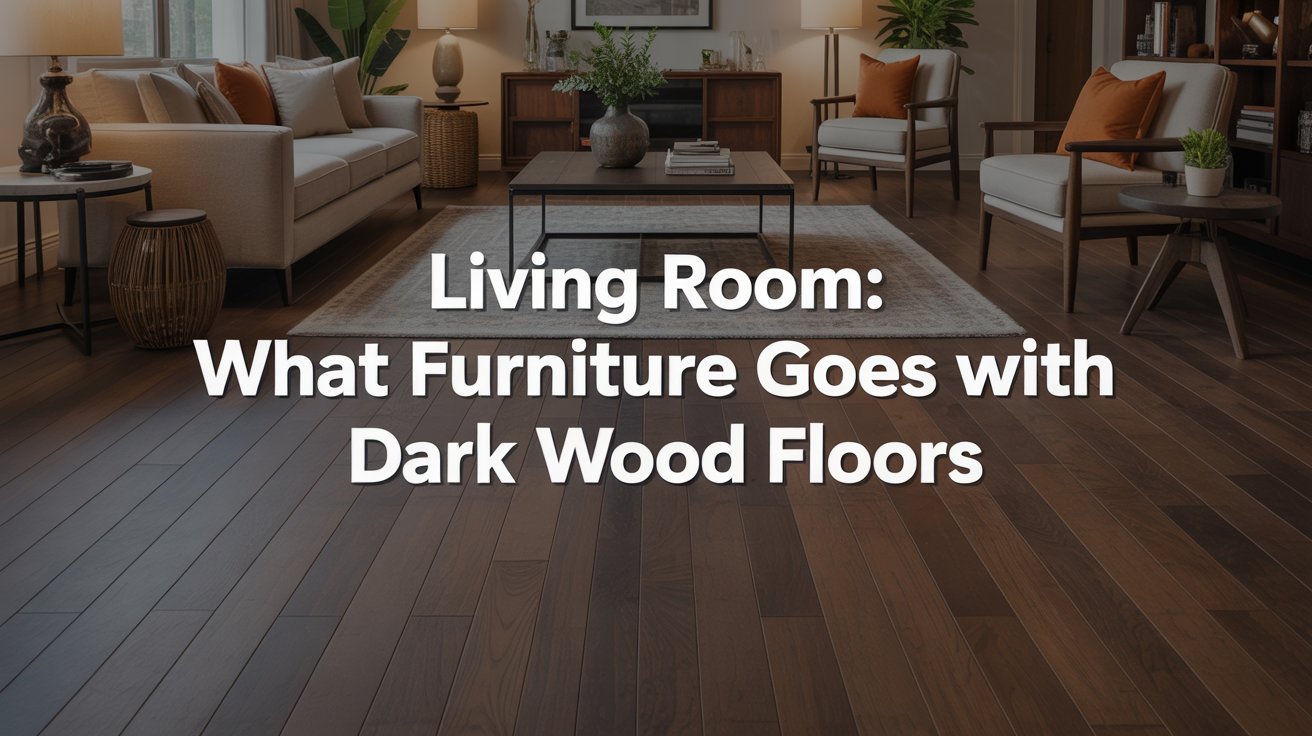

I know how tricky it can be to furnish a living room with dark wood floors. You love the rich, warm look, but then you bring home furniture and something feels off.
Maybe your room looks too dark now. Or perhaps the colors just don’t work together like you hoped. I’ve been there, and you’re not alone in this struggle.
The truth is, dark floors can look amazing with the right furniture choices. This guide will help you pick colors, materials, and styles that actually work.
Let’s make your living room feel balanced, bright, and truly yours.
Understanding Dark Wood Floors
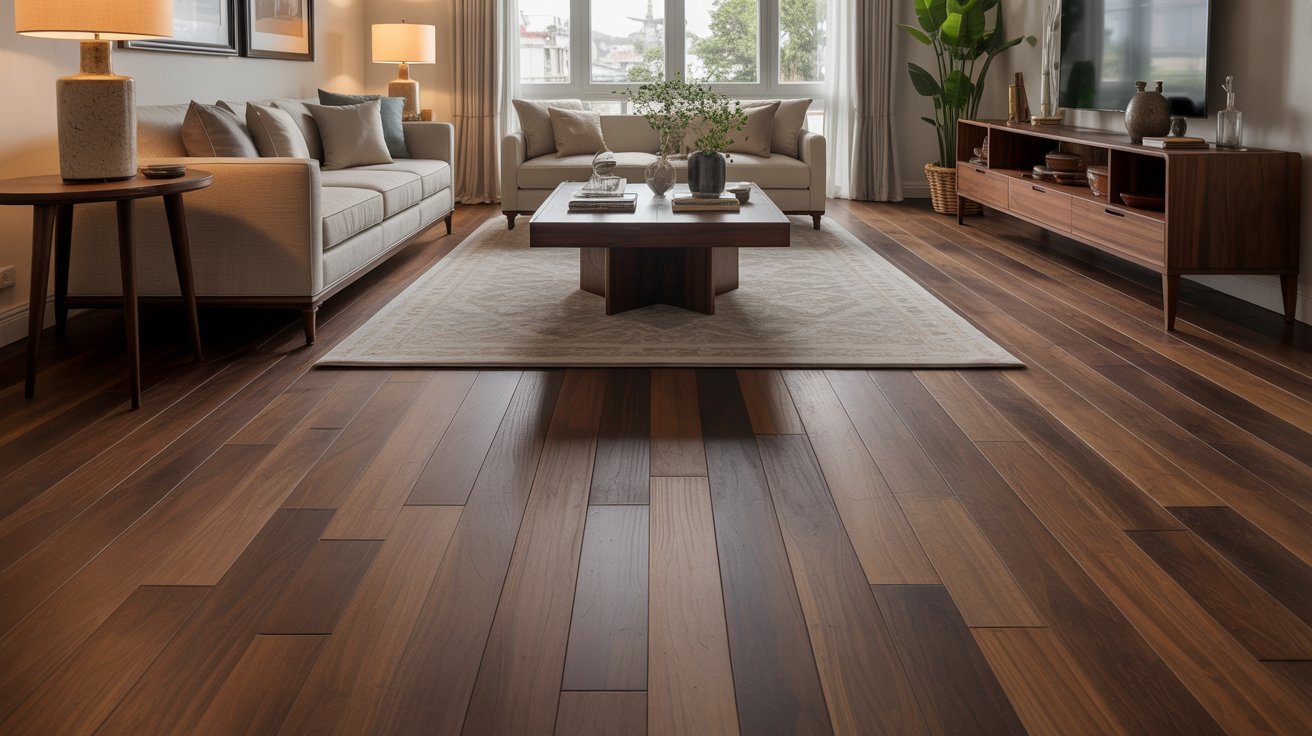
Learn about different dark wood types and the common decorating challenges they present in your living room.
Characteristics of Dark Wood Floors
Dark wood floors come in several types. Walnut offers warm brown tones with subtle grain patterns. Mahogany brings reddish hues that add richness to any space. Ebony provides the deepest, almost black finish for a bold statement.
These floors give your living room a luxurious feel. They add depth and character that lighter floors simply can’t match. The natural grain and color variations create visual interest underfoot.
Challenges in Decorating
But dark floors do come with some challenges. They absorb light instead of reflecting it. This can make your room feel smaller than it actually is. You might notice the space seems darker, especially if you have limited natural light.
There’s also a risk of creating a heavy look. Too much dark furniture paired with dark floors can feel overwhelming. The key is finding the right balance to keep your space feeling open and comfortable.
Choosing the Right Furniture Colors
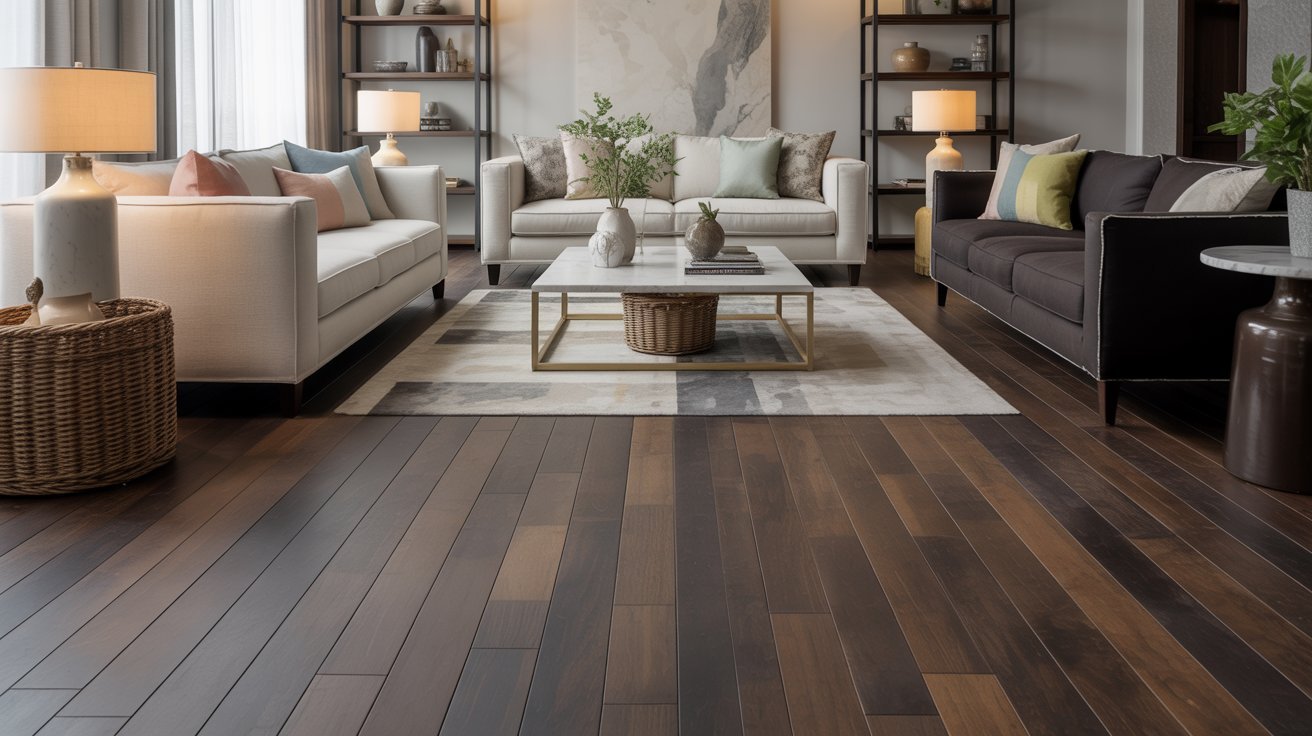
Find out which furniture colors work best with dark floors, from light neutrals to bold accent pieces.
Light-Colored Furniture
Light furniture works beautifully with dark wood floors. Think white sofas, cream armchairs, or beige sectionals. Pastel tones like soft blue or pale pink also create a lovely contrast.
These lighter pieces brighten your room instantly. They reflect light and make the space feel more open. Plus, they let your gorgeous dark floors take center stage.
Dark-Colored Furniture
Dark furniture can look sophisticated on dark floors. A charcoal sofa or chocolate brown chair adds elegance and formality to your space.
But here’s the trick: you need lighter accents. Add cream pillows, a white throw, or a light-colored rug. This prevents your room from feeling too heavy or closed in.
Grey and Neutral Tones
Grey is your middle ground. Light grey works great for larger pieces like sofas. Dark grey makes excellent accent chairs or ottomans.
Grey pairs well with any dark wood tone. It complements cool walnut floors and warm mahogany equally well.
Bright Accents
Don’t be afraid of color. Jewel tones add life to your space. Try emerald green pillows, sapphire blue throws, or ruby red cushions.
Area rugs with bright patterns work too. These pops of color create visual interest without overwhelming your room.
Mixing Furniture Styles and Materials
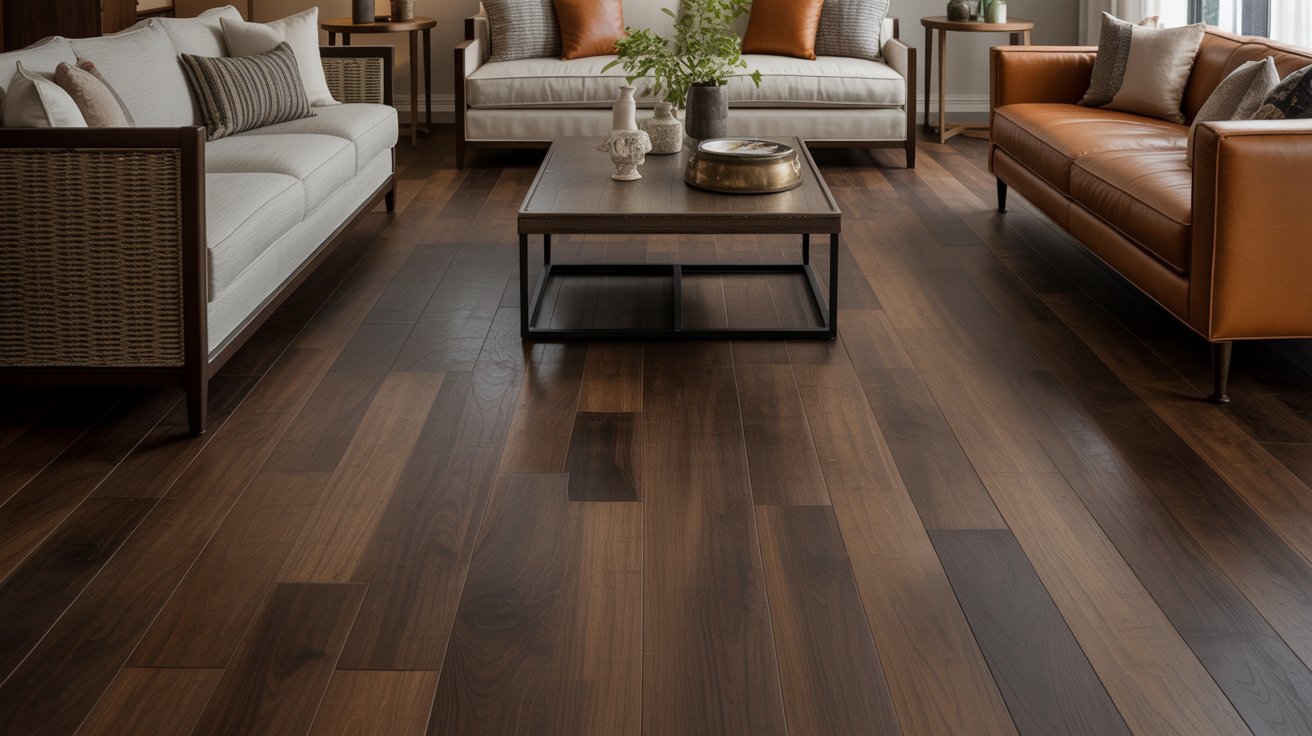
Combine different furniture colors, textures, and finishes to create a living room that feels balanced, interesting, and pulled together.
Combining Light and Dark Furniture
Dark furniture tends to blend into the background. Light pieces naturally catch your eye first.
Using both creates a balanced look. Your living room gets more depth and visual interest.
Textures and Materials
Mix different materials like leather, velvet, wicker, and metal. Each one brings something different to the space.
Layering these textures makes your room feel warmer. It also adds a more polished, refined look.
Matching Furniture Legs and Floors
Choose furniture legs in wood tones that match your flooring. This creates a cohesive feel throughout the room.
If you have lots of dark furniture, break it up. Add lighter wall colors or décor pieces to balance things out.
Applying Design Principles
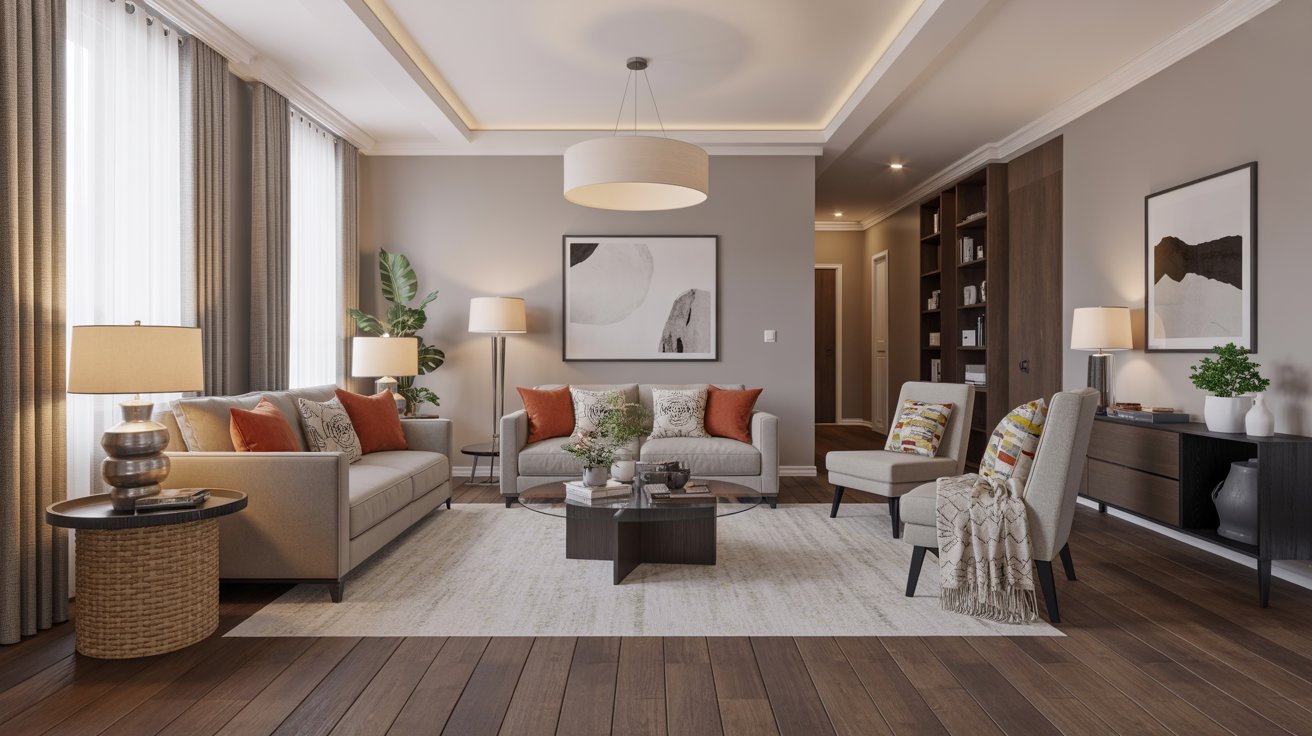
Use the 60-30-10 color formula to create rooms that feel coordinated and well-designed without looking too matchy.
The 60-30-10 Rule
Use your main color for 60% of the room. This includes floors and walls.
Your secondary color covers 30%. This is mostly furniture.
Save 10% for accent colors. These are your pops of color in pillows, art, and accessories.
This split keeps your color palette balanced. Everything works together without feeling overwhelming.
Brightening the Living Room
Add area rugs in light shades or fun patterns. They instantly lift a dark space.
Paint walls in lighter colors. Hang mirrors to bounce light around the room.
Layer your lighting with three types. Use overhead lights for general brightness. Add table lamps for reading or tasks. Include accent lights to highlight art or features.
Room Layout and Placement Tips
- Light-colored sofas create strong contrast with dark floors and make the seating area stand out. Dark sofas work too if you add bright cushions or a colorful rug underneath.
- Glass or metallic coffee tables keep the room feeling light and open. They don’t add visual weight like solid wood pieces do.
- Light wood side tables offer a nice contrast against dark flooring. They also bring warmth and a softer feel to the space.
- Choose light or mid-tone wood for shelving and cabinets to balance the darkness of your floors. This prevents the room from feeling too heavy.
- Mix different textures and colors on shelves and furniture pieces. Layering creates depth and makes your living room more visually interesting.
Décor and Accessories
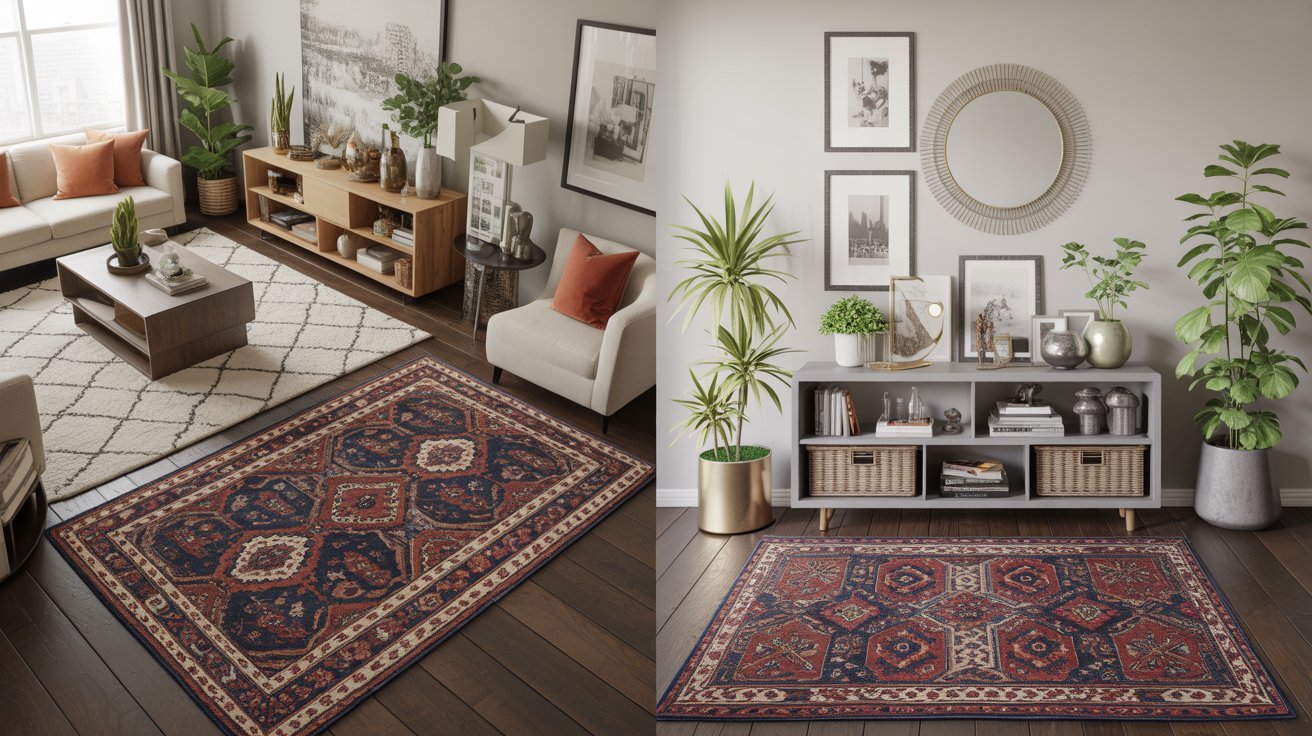
Add the right finishing touches to make your living room with dark floors feel complete and personal.
1. Area Rugs
Large area rugs help define different zones in your living room. They also brighten up dark floors instantly.
Choose rugs with patterns and textures. These add visual interest and break up solid colors throughout the space.
2. Wall Art and Mirrors
Hang vibrant or light-colored art on your walls. It creates a nice contrast with dark flooring.
Mirrors help bounce natural light around the room. They also make your space feel larger and more open.
3. Plants and Greenery
Use light or metallic planters to contrast with dark floors. They add brightness and a modern touch.
Mix tall plants with smaller ones. This combination brings life to your room and adds a softer, more organic feel.
4. Personal Touches
Display family photos, travel souvenirs, and unique décor pieces. These items tell your story and make the space yours.
Combine vintage finds with modern pieces. This mix adds character and shows your personality without sticking to one rigid style.
Conclusion
Dark wood floors bring timeless beauty to your living room when you pair them with the right furniture.
The key is finding a balance between light and dark tones while mixing different textures throughout the space.
Add personal touches that reflect who you are and what you love. Your living room should feel like yours, not a furniture catalog.
When choosing furniture, think about how you actually use your space. Focus on pieces that work for your daily life and match your personal style. A room that functions well and looks good will always feel right.
Frequently Asked Questions
What color sofa works best with dark wood floors?
Light-colored sofas in cream, beige, or gray create beautiful contrast with dark floors. Dark sofas also work well if you add colorful cushions or a bright area rug to balance the look.
Should my coffee table match my dark wood floors?
Your coffee table doesn’t need to match your flooring exactly. Glass, metal, or light wood tables actually work better because they prevent the room from feeling too heavy.
How can I brighten a living room with dark floors?
Use light-colored walls, large mirrors, and plenty of lighting to reflect more light. Add area rugs in lighter tones and choose furniture in softer colors to open up the space.
Can I mix different wood tones with dark floors?
Yes, mixing wood tones adds interest and keeps your room from looking too matchy. Aim for furniture legs in similar undertones, and use lighter wood pieces to create contrast.
What décor accessories complement dark wood floors?
Light or metallic planters, colorful throw pillows, and vibrant wall art work great. Mirrors and glass accessories also help reflect light and keep the room feeling bright and open.