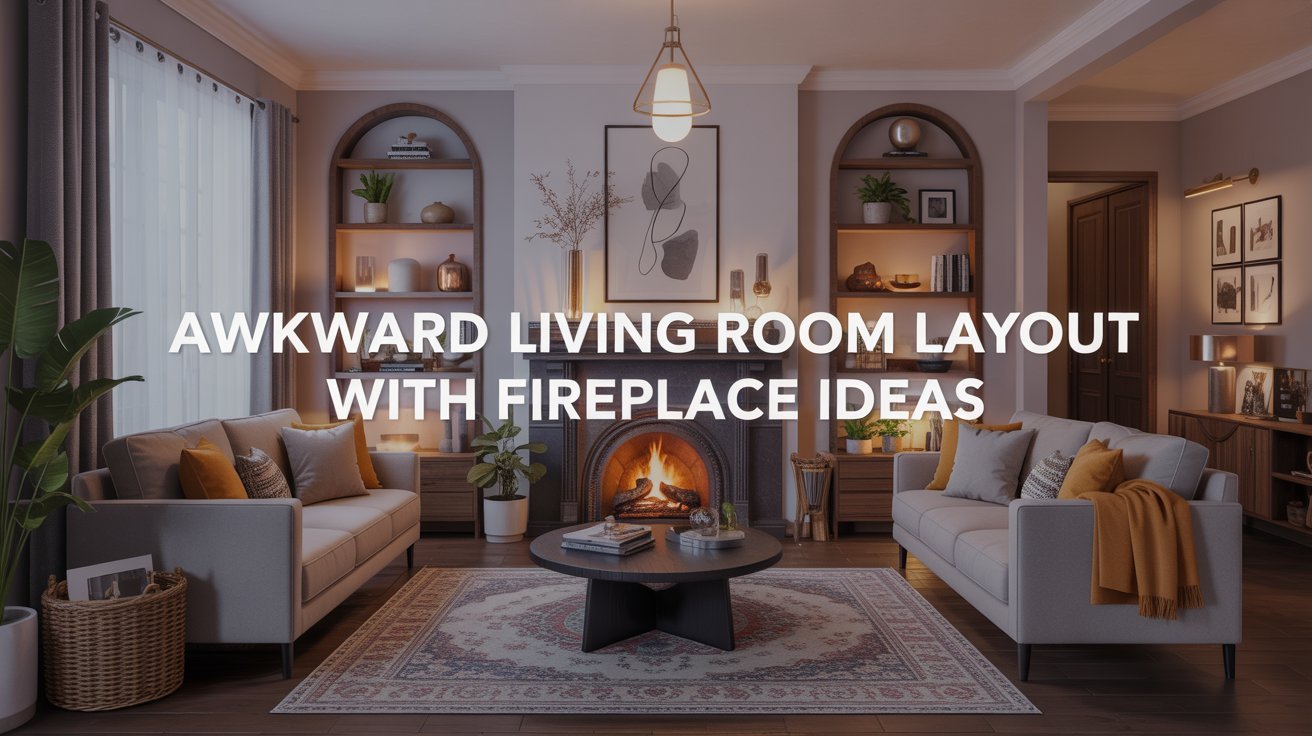

Have you ever moved your couch five times trying to figure out where it goes with your fireplace? I get it.
That beautiful fireplace you love can quickly become your biggest decorating headache.
Maybe yours sits in a corner, or it’s blocking the perfect TV spot, or it just makes the whole room feel off-balance. Trust me, you’re not the first person to struggle with this. The truth is, awkward fireplace layouts are more common than you think.
But here’s the exciting part: your tricky space has a solution.
I’m sharing 21 ideas that actually work for real homes with real layout problems.
Why Fireplace Layouts Can Be Tricky in Living Rooms
Your living room layout affects how you use the space every single day. When a fireplace enters the picture, things get complicated fast.
Narrow rooms make it hard to fit furniture without creating a cramped feeling. L-shaped rooms split your attention between two areas, and you’re left wondering where to focus.
Then there are fireplaces positioned in weird spots like off-center walls or tucked into corners.
The biggest mistakes I see are blocking the fireplace with furniture, overcrowding the area with too many pieces, and forgetting about walking paths. Your layout should let people move freely without squeezing past your coffee table.
21 Creative Awkward Living Room Layout Ideas with Fireplace
These practical solutions will help you arrange furniture and decor around your fireplace, no matter how challenging your space feels.
Seating Arrangements
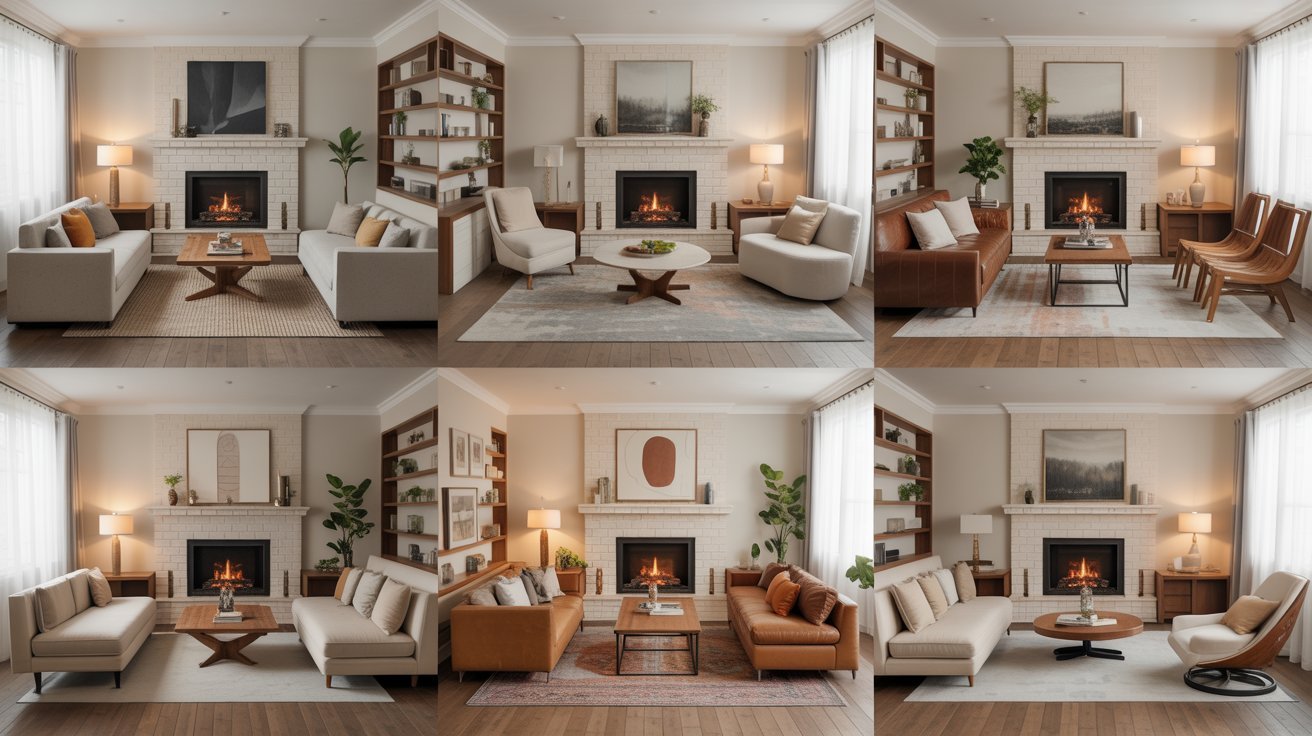
- Floating furniture around the fireplace: Pull your sofa away from the walls and center it facing the fireplace. This creates an intimate conversation area and makes the room feel more open and inviting instead of pushed against the edges.
- Asymmetrical sofa and chair placement: Skip the matching pairs and place your sofa on one side with a single chair angled on the other. This setup works great for odd-shaped rooms and adds visual interest without feeling too formal.
- Corner fireplace with sectional layout: Use an L-shaped sectional to wrap around a corner fireplace. The sectional naturally follows the room’s angle, maximizes seating, and keeps everyone oriented toward the warmth and flames without awkward neck craning.
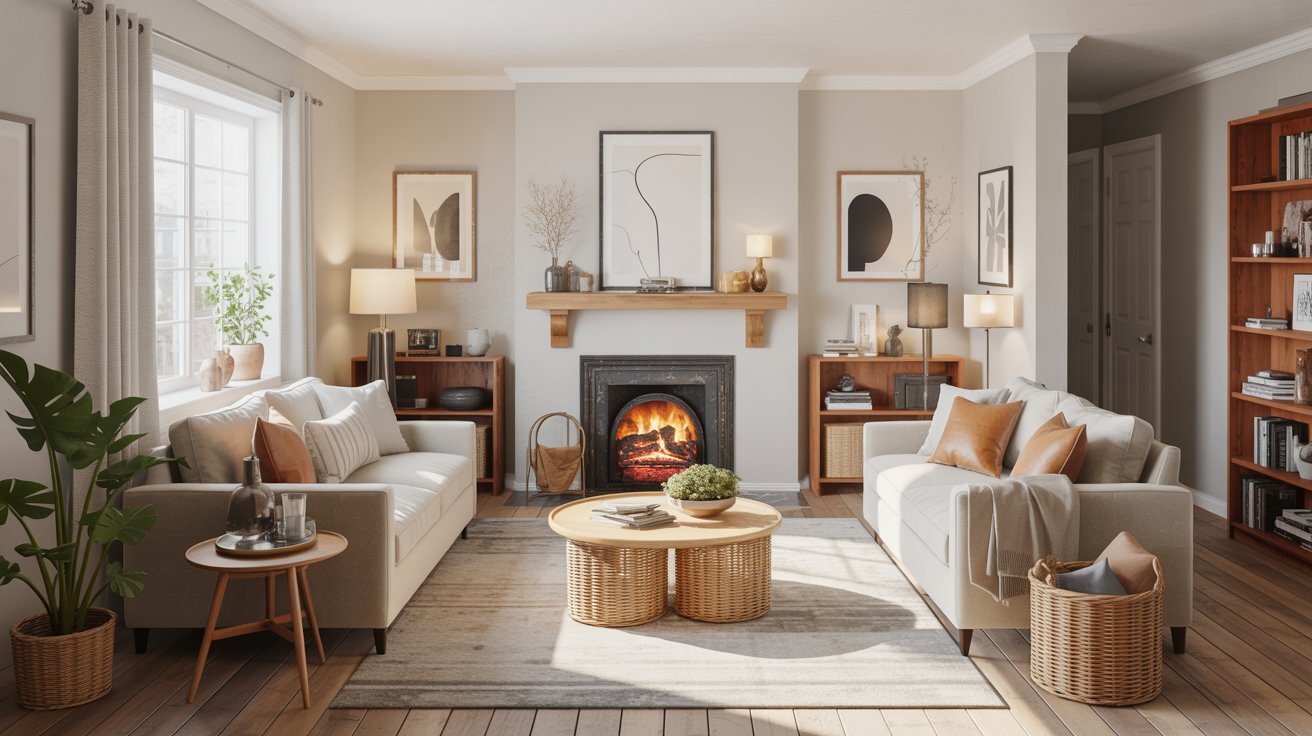
- Symmetrical seating with a rug anchor: Place two identical sofas or chairs directly across from each other with the fireplace on one end. Add a large rug underneath to tie everything together and create a balanced, organized look.
- Two smaller sofas facing each other with fireplace as focal point: Instead of one large couch, use two loveseats positioned face-to-face. The fireplace becomes the anchor point, and this arrangement encourages better conversation while keeping sightlines open and comfortable.
- Adding a bench or built-in seating near fireplace: Install a low bench or built-in seat along the fireplace wall. This provides extra seating without taking up floor space, perfect for small rooms where every square foot counts and traditional chairs won’t fit.
- Swivel chairs angled toward the fireplace: Use chairs that rotate so guests can turn toward the fireplace or the TV. This flexible option solves the problem of choosing between two focal points and lets people adjust their view as needed.
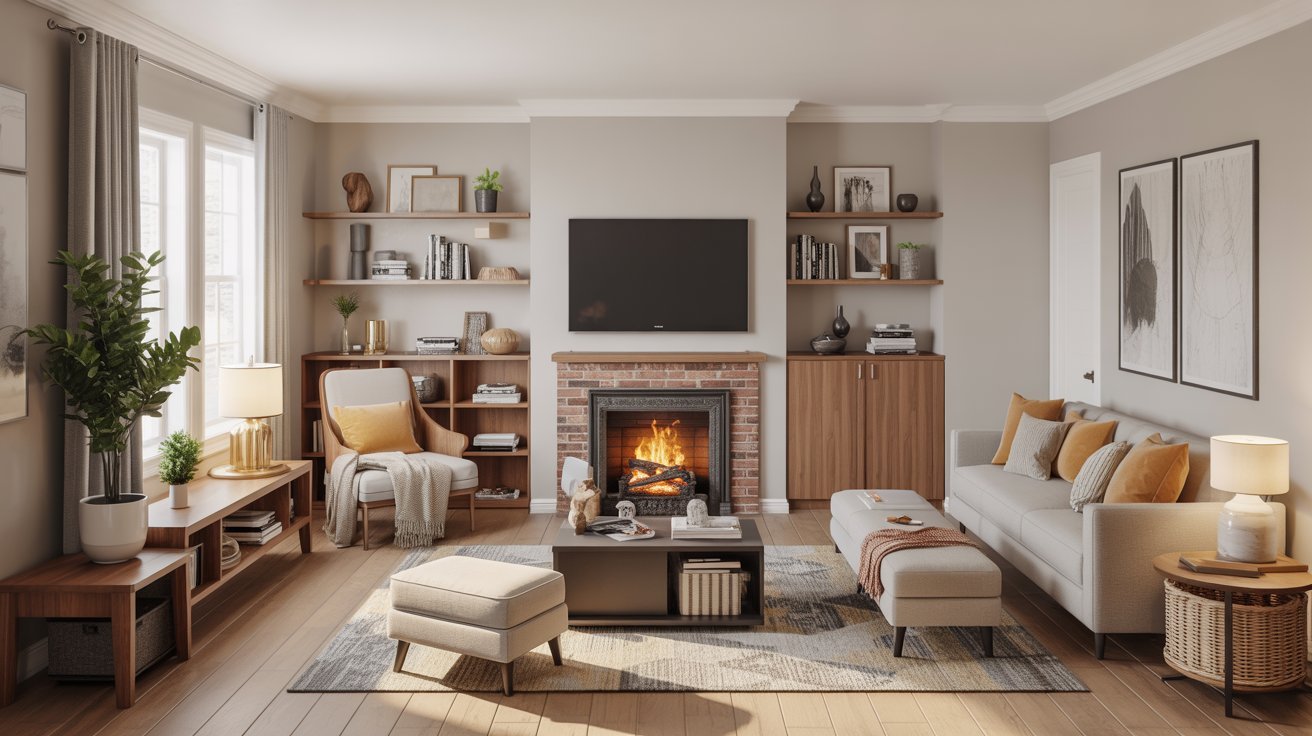
- Creating a reading nook next to the fireplace: Place a comfortable chair with good lighting beside the fireplace. Add a small side table and throw blanket to create a cozy spot that uses otherwise wasted corner space and gives the room another purpose.
- Using the fireplace wall as a media center: Mount your TV above or beside the fireplace and add built-in shelving for electronics. This solution combines two focal points into one wall, freeing up other walls for better furniture placement and traffic flow.
- Multi-purpose furniture to save space: Choose pieces that serve double duty like storage ottomans or sofa beds. These items reduce clutter and give you flexibility in tight spaces where traditional furniture makes the room feel packed and hard to move through.
- Corner shelving or cabinets to balance awkward spaces: Install shelves or cabinets in empty corners opposite the fireplace. This evens out the visual weight of the room, provides storage, and fills dead space that usually just collects dust or looks unfinished.
- Using rugs to define separate zones: Layer different rugs to mark distinct areas like a seating zone and a walking path. This technique helps organize open layouts and guides people through the space without needing walls or physical barriers blocking views.
- Adding a console behind sofa for space division: Place a narrow console table behind your couch to separate the seating area from the rest of the room. It adds surface space for lamps and decor while creating a subtle boundary that improves flow.
- Using ottomans for flexible seating: Keep lightweight ottomans that you can move around easily. They work as extra seats when guests visit, footrests during movie night, or even side tables, adapting to whatever your awkward layout needs at the moment.
- Layering rugs to define areas: Place a smaller decorative rug on top of a larger neutral one near the fireplace. This adds depth and visual interest while clearly marking the fireside seating area as separate from dining or walking spaces.
- Accent walls and mantel decor to enhance focus: Paint the fireplace wall a different color or add textured wallpaper. Style the mantel with personal items and artwork that draw eyes toward the fireplace, making it the clear star of the room despite layout challenges.
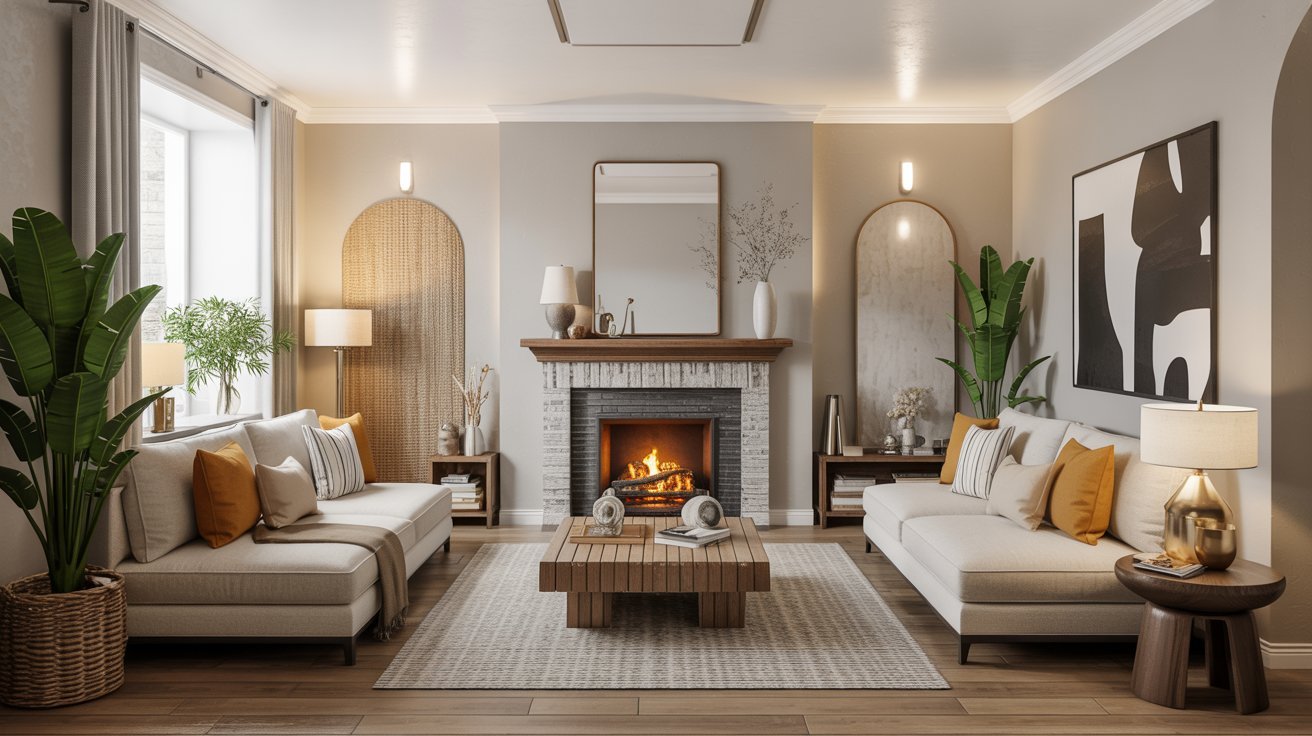
- Mirrors to expand visual space: Hang a large mirror above the mantel or on an adjacent wall. The reflection bounces light around and makes cramped or oddly shaped rooms feel twice as big while highlighting your fireplace from multiple angles.
- Tall plants or sculptures for balance: Add height with floor plants or tall decorative pieces in empty corners. These vertical elements balance out a low, horizontal fireplace and fill awkward gaps without adding bulky furniture that crowds the already tricky space.
- Lighting strategies to highlight fireplace: Use wall sconces flanking the fireplace or add recessed lighting above it. Proper lighting draws attention to your focal point even in dim conditions and helps define the seating area when the fire isn’t burning.
- Minimalist approach for tight or irregular rooms: Keep furniture to a minimum and choose sleek, low-profile pieces. In small or strangely shaped spaces, less is more. A simple setup prevents the room from feeling chaotic and lets the fireplace shine without competing with clutter.
- Mixing textures and colors to distract from awkward angles: Use varied fabrics, patterns, and colors throughout the room. Rich textures on pillows, throws, and upholstery create visual interest that pulls attention away from odd corners or uneven walls toward your intentional design choices.
Functional Zones & Space Solutions
Styling Tips & Decorative Tricks
Tips to Make Any Awkward Living Room Feel Cozy
- Leave at least 30 inches of walking space between furniture pieces. Clear pathways let people move through the room comfortably without bumping into tables or squeezing past chairs.
- Arrange your main seating to face the fireplace directly. This makes the fireplace the star of the room and gives everyone a natural place to look and gather.
- Measure your room before buying furniture to avoid oversized pieces. A huge sectional in a small space makes everything feel cramped, while tiny furniture in a large room looks lost.
- Use the fireplace to anchor your layout decisions. Position your largest furniture piece across from or angled toward it to create a cohesive arrangement that makes sense.
- Match furniture height to your room proportions. Low-profile pieces work better in rooms with standard ceilings, while tall bookcases and statement chairs suit spaces with higher ceilings.
Conclusion
Your awkward living room layout doesn’t have to stay a problem.
With the right furniture placement and a few creative tricks, you can turn that tricky fireplace into the best feature of your home.
I’ve shown you 21 different ways to make it work, but here’s the real secret: your space is unique. What works in someone else’s home might not work in yours, and that’s okay.
Try different arrangements. Move things around on a weekend. See what feels right when you actually sit down and use the room.
The perfect layout is the one that makes you want to spend time there, fireplace and all.
Frequently Asked Questions
How do I arrange furniture in a living room with an off-center fireplace?
Float your sofa to face the fireplace directly, even if it’s not centered on the wall. Balance the asymmetry by adding a chair or tall plant on the empty side to create visual weight.
Can I put my TV above the fireplace?
Yes, but make sure it’s mounted at a comfortable viewing height, usually 42-55 inches from the floor. Consider using a tilting mount so you can angle the screen down for better neck comfort.
What’s the best seating arrangement for a corner fireplace?
An L-shaped sectional works perfectly because it wraps around the corner naturally. Alternatively, place two chairs at an angle facing the fireplace to create an intimate conversation spot.
How do I make a narrow living room with a fireplace feel bigger?
Keep furniture away from the walls and use lighter colors to open up the space. Add a large mirror near the fireplace to reflect light and create the illusion of more square footage.
Should the fireplace or TV be the focal point of my living room?
Choose based on what you use most, but you can have both. Mount the TV beside the fireplace or use swivel chairs so people can turn toward either one depending on the activity.